


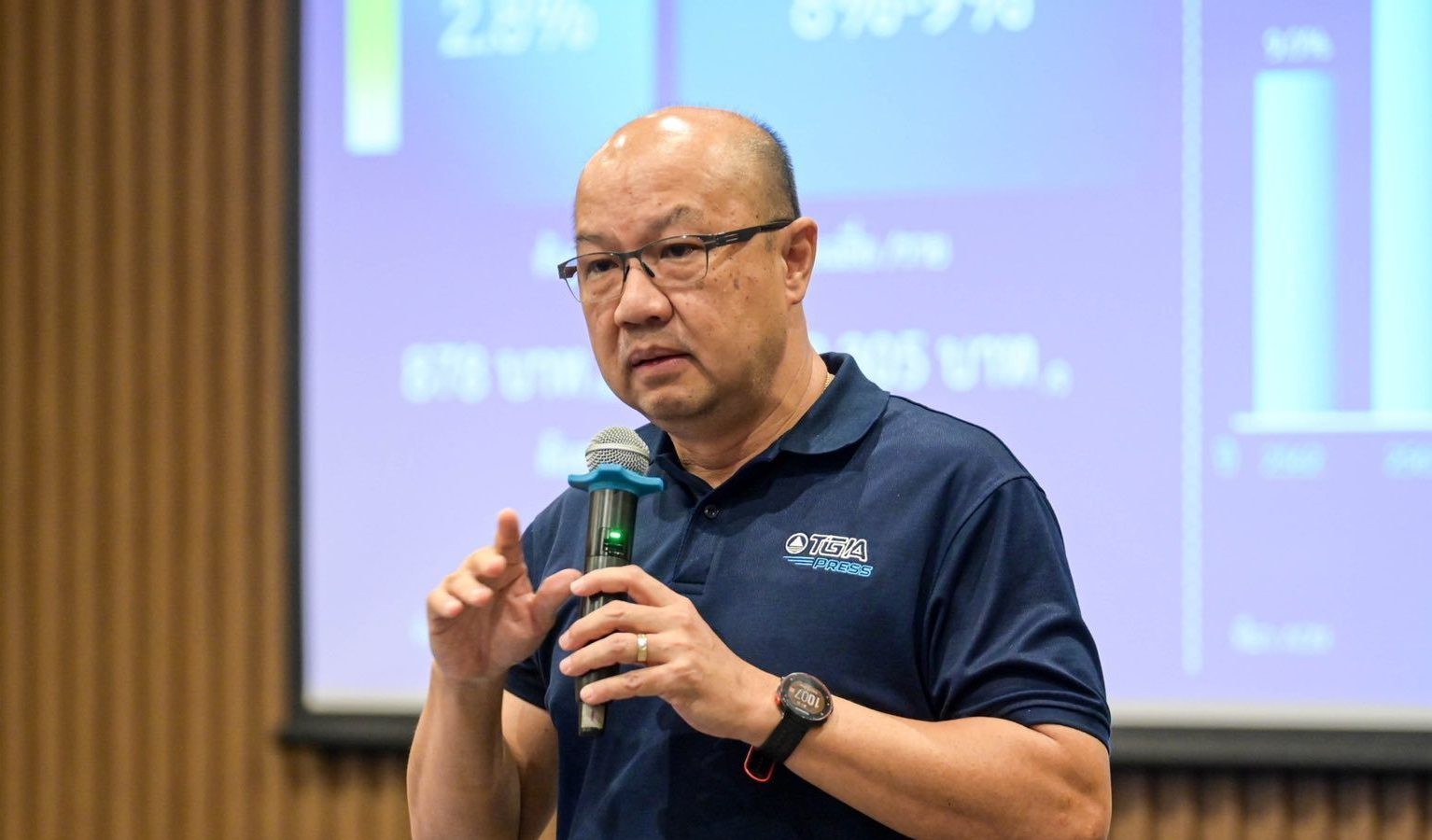
Mr. Piyaphat Wanaukrit, Chairman of the Accident and Health Insurance Committee, spoke about Thailand’s trend of entering a “super-aged society,” with the elderly expected to account for 21.31% of the total population in 2025, rising to 25% in 2030, and as high as 30% in 2040, with women accounting for a larger proportion than men, reflecting the challenges of caring for the health of this population group in the future. Entering an aging society will bring higher healthcare costs, both from non-communicable chronic diseases, access to modern medical technology, and the need for sustainable health investment to accommodate demographic structural change.
Regarding the overall economic and health insurance industry picture in 2025, GDP in Q2 is expected to grow by 2.8%, while the health insurance business is still expected to continue growing at a rate of 8%-9%, with a key factor being medical inflation, expected to rise as high as 14.3%, resulting in higher medical treatment costs, whether outpatient service costs averaging 878 baht per visit, or over 3,305 baht per person per year, including inpatient service costs averaging over 20,445 baht per person. This situation reflects the necessity of planning and developing suitable health insurance products, in terms of both coverage and sustainability, to help ease the public’s expense burden and accommodate future health risks.
Medical inflation is driven by multiple factors at both the global and regional levels, such as investment in new medical technology and drugs, such as Targeted Therapy for cancer treatment, GLP-1 weight loss drugs, minimally invasive surgery, and the application of AI, as well as increased use of services following the COVID situation, both mental health care and telehealth, including behavior involving excessive testing and treatment, lack of appropriate disease prevention, and the cost of drugs, particularly specialty drugs, which continue to face supply chain risks. For Thailand, there are additional specific pressuring factors, including high medical personnel wages and personnel shortages, being a medical tourism hub which draws additional resources, a public health system with limited budget causing the public to turn to private health insurance, an aging society and the growth of non-communicable diseases (NCDs), private hospital investment to compete as a medical hub, as well as drug and equipment import costs sensitive to changes in the baht exchange rate. Compared structurally with other countries, data on average medical inflation from WTW, AON, and Marsh shows that since 2022, Thailand’s medical inflation rate has been clearly higher than both the APAC and global averages.
The 1-3 year short-term health insurance development plan focuses on issuing products consistent with the business’s risk costs, adjusting premium rates and policy formats appropriately, while building public awareness of health insurance, alongside raising the pricing structure standards for medicine, medical supplies, and medical treatment costs, through grouping network hospitals by cost and service quality, establishing a framework for evaluating medical facilities, and pushing for cooperation with the Department of Internal Trade to regulate prices. It also involves developing standard data and claims management systems, such as Insurance Connext, to reduce the problem of duplicate receipt usage, implementing Itemize Billing legal requirements, promoting Open Insurance, and conducting network hospital assessment visits by the medical advisory board. There is also follow-up on proposals to improve tax deduction benefits from health insurance premiums, supporting public hospitals’ readiness to serve health insurance customers through special channels, driving the use of technology and AI in sales, underwriting, claims payment, and fraud detection, as well as developing a central industry dashboard to compile data from related agencies, to elevate risk management and develop health insurance products effectively and sustainably in the future.
As for the 5-10 year long-term health insurance development plan, it focuses on integrating the voluntary health insurance system with government welfare, such as Top-up health insurance policies for Social Security benefits and benefits under the Universal Coverage Scheme (NHSO), to increase choices and coverage for the public, through participation in a working group to develop the country’s health insurance system, and participation in a sub-working group to improve and develop insurance products. At the same time, cooperating with both the public and private sectors to develop policies that meet the specific needs of policyholder groups, whether building on the basic rights of civil servants, Social Security, or NHSO, to accommodate health risks and elevate access to services comprehensively and sustainably.
“Future health challenges are not the concern of any one party, but a shared challenge for the government, private sector, and public, who must join hands to develop a health insurance system that addresses both the coverage and stability of Thai society.”